Section · source pages 79–80
Buffalo + Bow Bar
Source-derived benefits, primary lifts, banded setup notes, loading note, and wave example for the Buffalo + Bow Bar.
Buffalo + Bow Bar
Benefits
- Removes the rotational component of squatting or doing a good morning with a straight bar.
- Shifts the barbell weight lower on the athlete than a straight bar.
- Increased ROM on bench press.
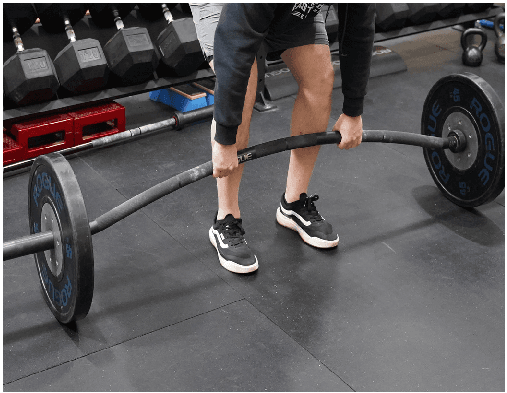
- It’s diameter and stiffness make it a challenging bar to deadlift with (even though the ROM is reduced).
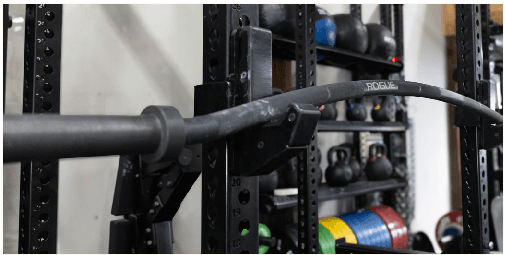
Banded Set-up
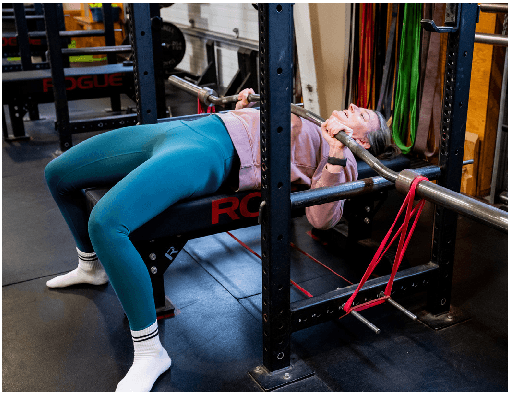
The bow bar positions the sleeve of the bar lower than when using a straight bar. For bench press this means, depending on the thoracic size of the athlete, the bands can end up slack at the bottom of the lift and vulnerable to slipping off the T pins. Slack at the bottom of the lift when using bands is not ideal and may justify using a different bar. Adding a “keeper band” like we do when using bands and chains together (see pg. 61) will prevent the band from coming off the T pins.
Primary Lifts
- #1 Back or Box Squat.
- #2 Bench Press.
- #3 Good Mornings.
Odd Lift
Deadlifts.
Loading note
Be very careful loading and unloading this bar, when the difference in weight is too great from one side to the other the bar can slide and then flip quietly and quickly. One thing that can help with this is flipping the J-cups so the piece that is behind the post is on the inside of the rack. This will allow the J-cups to sit at the same angle as the camber of the bar.
Camber variation example
There are many camber variations in these bars depending on the manufacturer. If possible, it’s pretty fun to have several variations and camber sizes. A good example of where this can be used is a 3 week wave cycle of bench press 1RM.
- Week 1: Buffalo bar (largest camber): 1RM.
- Week 2: Mega bow (second largest camber): 1RM.
- Week 3: Bow (smallest camber): 1RM.
These bars could be extended to a 6 week cycle if you add in a week of accommodating resistance before each week of straight weight. Or a 7 or 8 week cycle if you finish with a straight bar bench press.
Conclusion
It’s important to remember that all barbells cause a slightly different stimulus. These variations reduce the risk of over-training muscles as well as wear and tear on both the tissues and the joints while at the same time building a more well rounded athlete than one who only uses a straight bar. This allows the athlete to be strong in both optimal and sub optimal positions. Specialty bars also help identify strengths and weaknesses in an athlete’s movement and give greater insight into what accessory work might be best for them. Switching out barbells weekly or every couple weeks keeps athletes motivated, excited to train, learning, and engaged with their strength training plan. The best programming is only as good as the athlete’s discipline, intensity, and consistency to perform it. Specialty bars and accommodating resistance help.