Chapter · source pages 59–70
How to Setup and Use Chains
Chain setup overview, chain specifications, and links to individual setup pages.
How to Setup and Use Chains

Justin Medeiros
How to Set-up and Use Chains
Chains add yet another variance to our training. Although they are also considered accommodating resistance and operate similar to bands, they are not the same. Chains lack the overspeed eccentrics that bands have (created by the bands elasticity) and therefore have a very different feel. They also add almost no extra weight at the bottom of a lift, as the heavy chain deloads leaving only the weight of the leader chain Which can lead to the feeling of “hitting a wall” as the chain comes back on roughly at the same spot primary movers are shifting (“sticking point”).
These couple things make them a great addition to the system and a valuable resource in their own way. For example: An athlete returning to using accommodating resistance after an injury will often start with chains first because of the lack of overspeed eccentrics. They also cause less muscle soreness for this reason and can be a good choice for athletes in season or a period of heavy training. Chains and bands can also be used together to produce a specific stimulus (for example trying to overload a sticking point).
What You Need
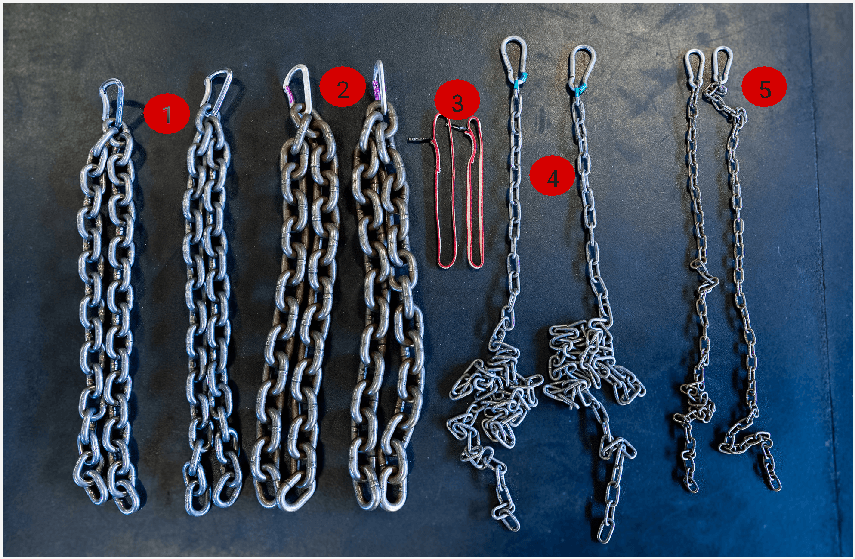
Chain Specifications
- 1/2” heavy chain - 20 pounds (35 links, roughly 55 1/2”).
- 5/8” heavy chain - 35 pounds (29 links, roughly 56 1/2”).
- Climbing Sling (used for Deadlifts).
- 1/4” leader chain for squats (55 links).
- 1/4” leader chain for bench (35 links).
- Carabiners.
Carabiners are attached to either the middle or end of a chain to attach them to the leader chain. Do not leave these carabiners attached to the heavy chain when being sorted as it can compromise or damage them, shortening their life.

Teigen Pascual